Introduction
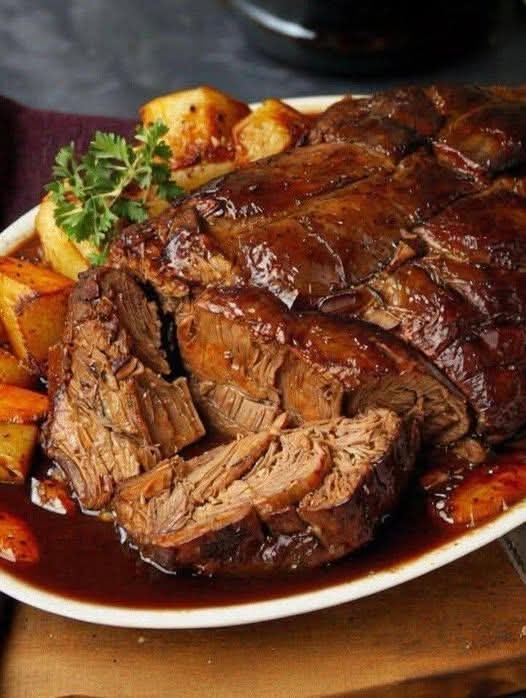
I was this close to giving up on cooking beef roasts—until I found this trick. The secret is a combination of high-heat searing followed by a low-temperature, slow roast that keeps the beef moist, tender, and consistently flavorful. This method works with almost any cut and requires very little effort.
Description
This beef roast uses a two-stage cooking technique: a hot sear locks in a savory crust, and a long, gentle roast at low temperature breaks down tough fibers and prevents the meat from drying out. The result is a juicy, sliceable roast with rich pan drippings perfect for gravy. It is dependable enough for holidays but simple enough for everyday meals.
—
Ingredients
For the Roast
3–4 pound beef roast (chuck roast, top round, bottom round, or sirloin tip)
2 tablespoons olive oil
1 tablespoon salt
2 teaspoons black pepper
2 teaspoons garlic powder
2 teaspoons onion powder
1 teaspoon paprika
1 teaspoon dried thyme or rosemary
For the Aromatics
1 onion, sliced
3 garlic cloves, smashed
1–2 cups beef broth
—
Instructions
1. Preheat and Season
1. Preheat oven to 275°F (135°C).
2. Pat roast dry.
3. Mix salt, pepper, garlic powder, onion powder, paprika, and herbs.
4. Rub seasoning all over the roast.
2. Sear the Roast (The Trick)
1. Heat olive oil in a heavy skillet over high heat.
2. Sear the roast on all sides until deeply browned.
3. This creates flavor and keeps juices inside during the slow cook.
3. Set Up the Roast
1. Place sliced onions and garlic in a roasting pan.
2. Set the seared roast on top.
3. Pour 1–2 cups beef broth around the meat (not on top).
4. Slow Roast
1. Cover tightly with a lid or heavy foil.
2. Roast for 3–4 hours until fork-tender or until internal temperature is 190–205°F for shreddable texture, or 135–150°F for sliceable texture.
3. Check broth halfway; add more if needed.
5. Rest and Serve
1. Remove roast from the oven and let rest 10–15 minutes.
2. Slice or shred.
3. Use pan drippings for gravy or au jus.
—
Tips
Searing makes the biggest difference in flavor and tenderness.
Low temperature prevents the roast from tightening and drying out.
Choose fattier cuts (chuck or shoulder) for maximum tenderness.
Let the meat rest so juices redistribute.
Use an oven thermometer for accuracy; small differences matter with low-and-slow cooking.
—
Variations
Herb-Crusted Roast: Add fresh rosemary, thyme, and crushed garlic to the top before roasting.
Onion Soup Roast: Replace broth with one can of condensed French onion soup.
Red Wine Roast: Substitute half the broth with red wine.
Vegetable Roast: Add carrots, potatoes, and celery around the roast for a full one-pot meal.
Spicy Roast: Add cayenne or chili flakes to the seasoning.
—
Correction (Common Mistakes and How to Fix Them)
Dry roast: Lower the oven temperature and ensure it is covered tightly; use a fattier cut.
Roast is tough: It needs more cook time; tough cuts soften only after long, slow cooking.
Not enough flavor: Increase seasoning or sear longer for deeper browning.
Too salty: Use low-sodium broth and season lightly next time.
Burning on the bottom: Add more broth and lower the oven rack or temperature.
—
Enjoy
Serve your tender, perfectly cooked beef roast with mashed potatoes, roasted vegetables, or crusty bread to soak up the flavorful juices. This method ensures reliable results every time and makes beef roasts a confident, stress-free meal.